
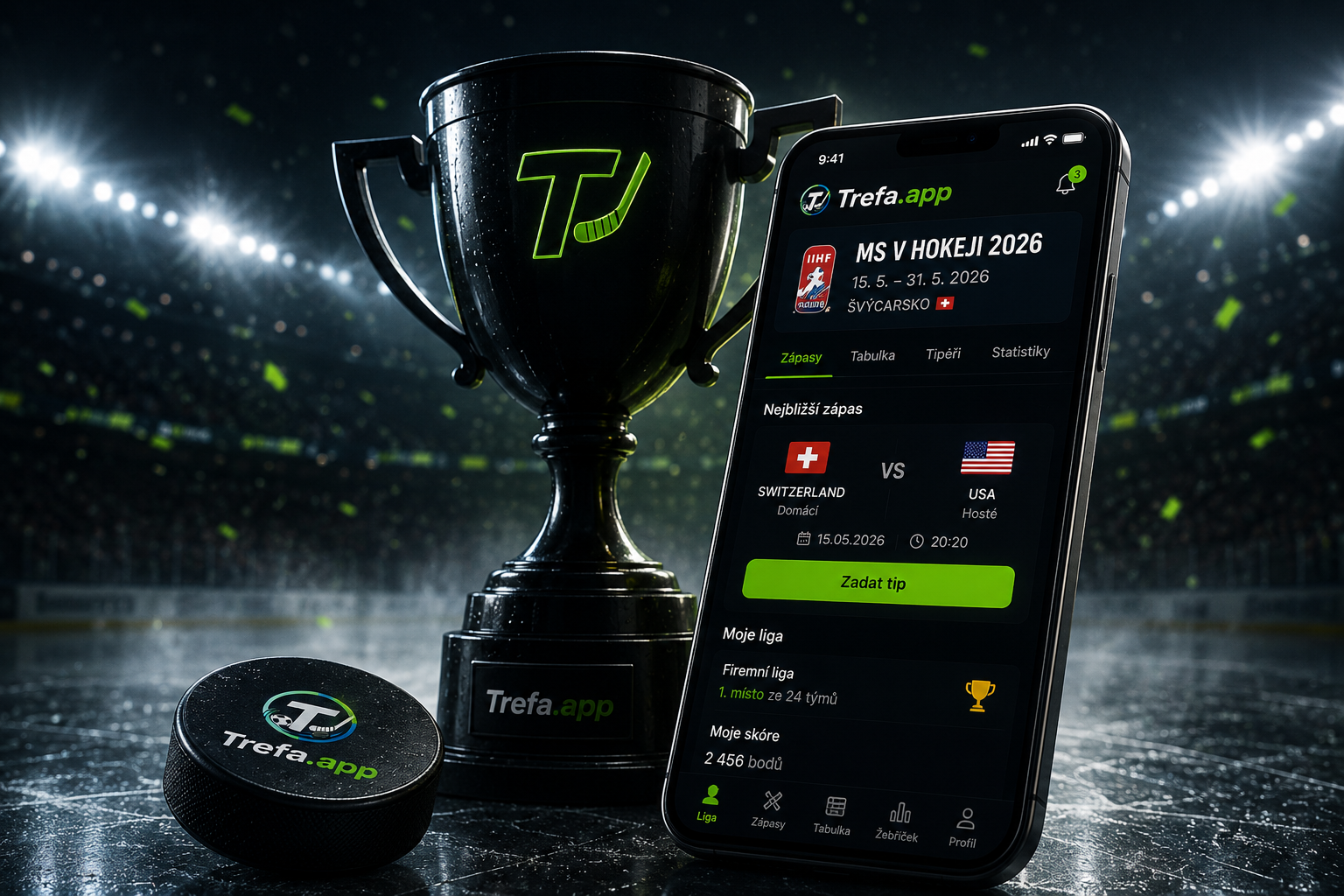
Corporate teambuilding has good intentions. Connect people, improve the team atmosphere and create a space where colleagues talk about something other than work. In practice, though, it often runs into one simple problem. Not everyone wants to take part in an organised activity that feels mandatory, unnatural or too formal.
That is exactly why small, voluntary and natural competitions often work better inside companies. For example, a workplace prediction pool during the Ice Hockey World Championship, a football tournament or another major sports event. It does not require complex organisation, does not need a big budget and can engage even people who would rather avoid classic teambuilding.
People join voluntarily
One of the main differences between a workplace competition and a classic teambuilding event is voluntariness. If someone receives an invitation to an all-day activity outside of work, they often see it as another obligation. Even if it is officially voluntary, in some teams there can be a sense that "you really should go."
With a prediction pool the situation is different. A colleague simply joins if they want to. They do not have to travel anywhere, they do not have to perform in front of others and they do not have to spend a whole day doing something that may not be pleasant for them. They just open the app, enter their predicted score and watch how they are doing against the others.
Because of that, the whole activity feels more natural. People take part not because they have to, but because they enjoy it.
The competition creates natural conversation topics
In companies there is often a lack of simple, neutral topics that people across different departments can chat about. Their work agendas are different, teams sit elsewhere, and some colleagues barely come into contact with each other during a regular week.
A sports prediction pool solves this very gently. One surprising result is enough and suddenly there is something to talk about at the coffee machine, in the kitchen, in the corridor or in the team chat.
"How could you have predicted 5:1?"
"You really hit the exact score?"
"Who is leading the table right now?"
Such short conversations seem unremarkable, but for company culture they have a great deal of value. They connect people who might otherwise not talk to each other at all.
Introverts join in too
Classic teambuildings often favour more extroverted colleagues. They naturally join in games, group activities and informal fun. For more introverted employees, however, that kind of environment can be uncomfortable.
A workplace competition is much more accessible in this respect. Everyone can join at their own pace. There is no need to be the centre of attention, to debate loudly or to take part in activities in front of others. And yet everyone has a chance to be part of something shared.
It is often these quieter colleagues who pull off a surprise. They suddenly appear at the top of the table, hit several exact scores in a row and become a topic of positive attention. Not because they had to perform in front of others, but because of the game itself.
It works across departments and locations
Modern companies often do not operate from a single office. Some people work from home, some are on shifts, some sit in another city or a completely different country. Organising classic teambuilding for everyone is then complicated, expensive and often unrealistic.
An online prediction league is much easier in this respect. One link is enough and anyone can join. The employee in the office, the colleague on home office, the technician in production and the manager on a business trip. They all see the same matches, the same leaderboard and the same results.
That creates a shared experience regardless of where each person happens to be.
No big budget needed
Corporate teambuilding can be financially demanding. Venue rental, transport, catering, the programme, an external agency or accommodation — all of that quickly drives up costs.
A workplace prediction pool, by contrast, is very lightweight. For smaller teams the basic version is free, and even for larger groups it is much simpler to organise than a classic offsite. The prizes for winners do not need to be expensive either. Symbolic awards often work better:
a travelling trophy that sits on the winner's desk, a shared lunch, a box of doughnuts for the department, branded company merch, a "day off coffee duty" or just a funny diploma for the best predictor.
What matters is not the value of the prize, but the story around it.
The activity lives for days or weeks
A one-off teambuilding event often ends the moment people drive home. The next day people talk about it for a while, but gradually the experience fades.
A sports tournament has a different dynamic. It runs for several days or weeks and each match brings a new impulse. The ranking shifts, someone climbs unexpectedly, a favourite tumbles down, and the atmosphere naturally builds up before the play-offs.
Because of that, a workplace competition has a longer life. It is not one isolated experience, but a running activity that reminds people of itself. Every match is a new opportunity to get involved.
The rivalry is healthy and safe
Competitiveness is natural in companies, but it should stay positive. A workplace prediction pool creates a safe space for light rivalry. It is not about work performance, sales numbers or employee reviews. It is about a game.
That is exactly why colleagues can allow themselves a bit of teasing, witty comments and friendly competition. A manager can lose to a junior, an experienced hockey fan can be beaten by a colleague who predicts based on her favourite jersey colours. That kind of equality is very valuable in this kind of competition.
For a moment the workplace hierarchy disappears and only the game remains.
Organisation does not need to weigh on one person
In classic company activities, a lot of the work often lies on a single organiser. They have to prepare the programme, communication, attendees, dates, logistics and afterwards still deal with feedback.
With a well-set-up prediction league the work is significantly smaller. The organiser sets up the competition, sends out the link and occasionally reminds people of the current standings. Results, points, ranking and locking of predictions are handled automatically by a dedicated tool.
That is a big difference compared to running it by hand in Excel, where someone has to enter results, check formulas, fix errors and answer questions like "how many points do I have?".
A workplace competition supports culture without pressure
Good company culture does not come from big events alone. It is often made up of small moments that quietly repeat. A short conversation, a shared joke, a running leaderboard in chat or the tension before a knockout game.
A workplace prediction pool is exactly this kind of activity. It does not force people to change how they behave, but it gives them a simple reason to be in contact. That is precisely why it can work better than many formal teambuildings.
It does not try to create a team atmosphere artificially. It creates the conditions in which one arises by itself.
When a workplace competition makes the most sense
It works best when it is tied to an event that people follow naturally. The Ice Hockey World Championship, the UEFA EURO, the FIFA World Cup, the Olympics or another big tournament are ideal opportunities.
The advantage is that the topic already exists. The company does not have to invent an artificial programme. It is enough to tap into the energy a sports event naturally brings and give it a simple frame.
A workplace prediction pool fits small teams, whole departments and larger companies. It can serve as a fun addition to internal communications, as an HR activity, as a friendly competition between departments, or simply as a way to make a tournament more enjoyable for colleagues.
Conclusion
Forced teambuilding often runs into the fact that people can tell when an activity is unnatural. Workplace competitions work differently. They are simple, voluntary, accessible and they create natural reasons to communicate.
A prediction league during a big sports tournament can connect colleagues without complex organisation, without high costs and without a sense of duty. It brings healthy rivalry, a shared topic and entertainment that lives throughout the tournament.
If you are looking for a simple way to liven up the atmosphere in your company, you do not have to start planning a big offsite right away. Sometimes it is enough to set up a league, send the link to your colleagues and let sport do the rest.